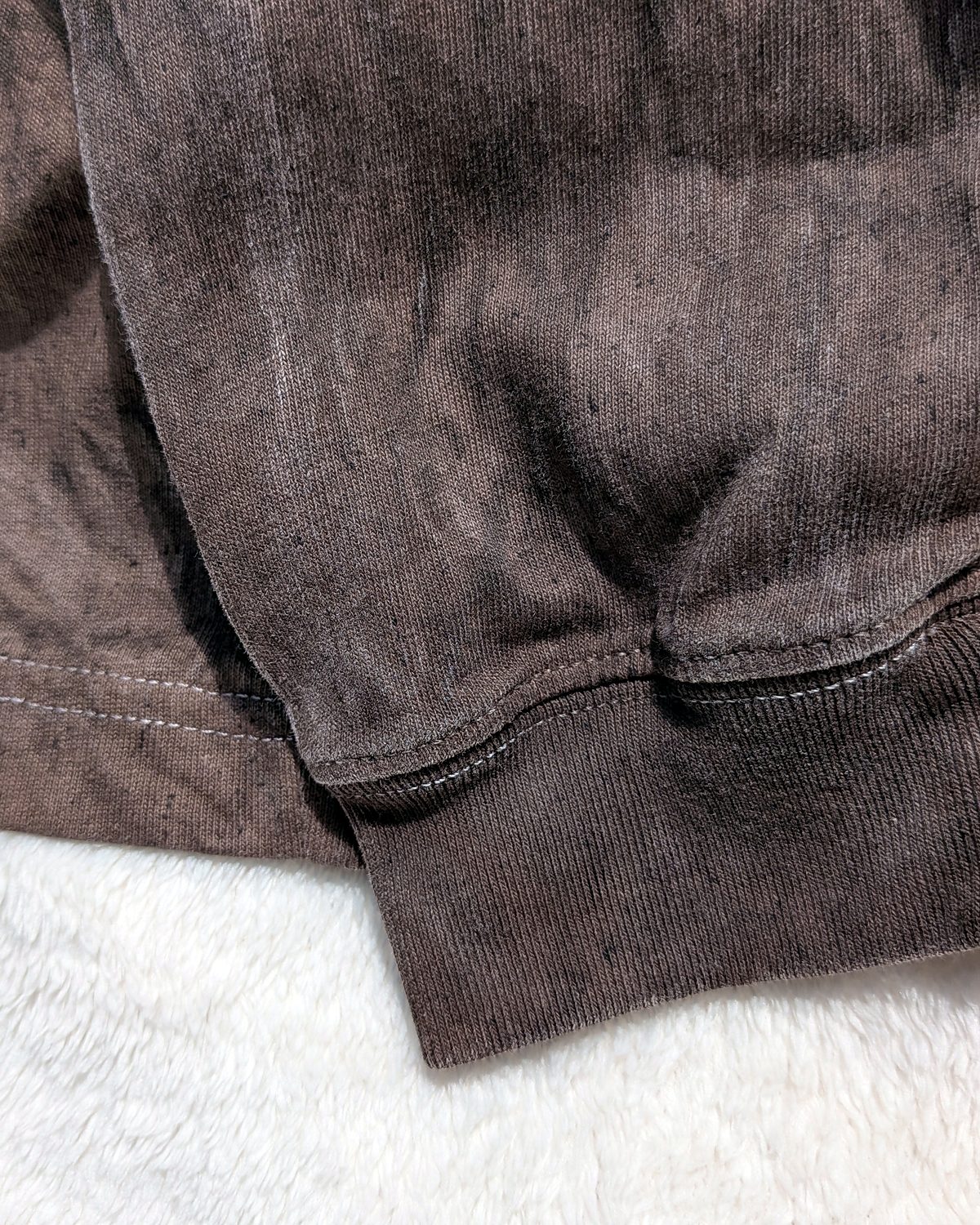
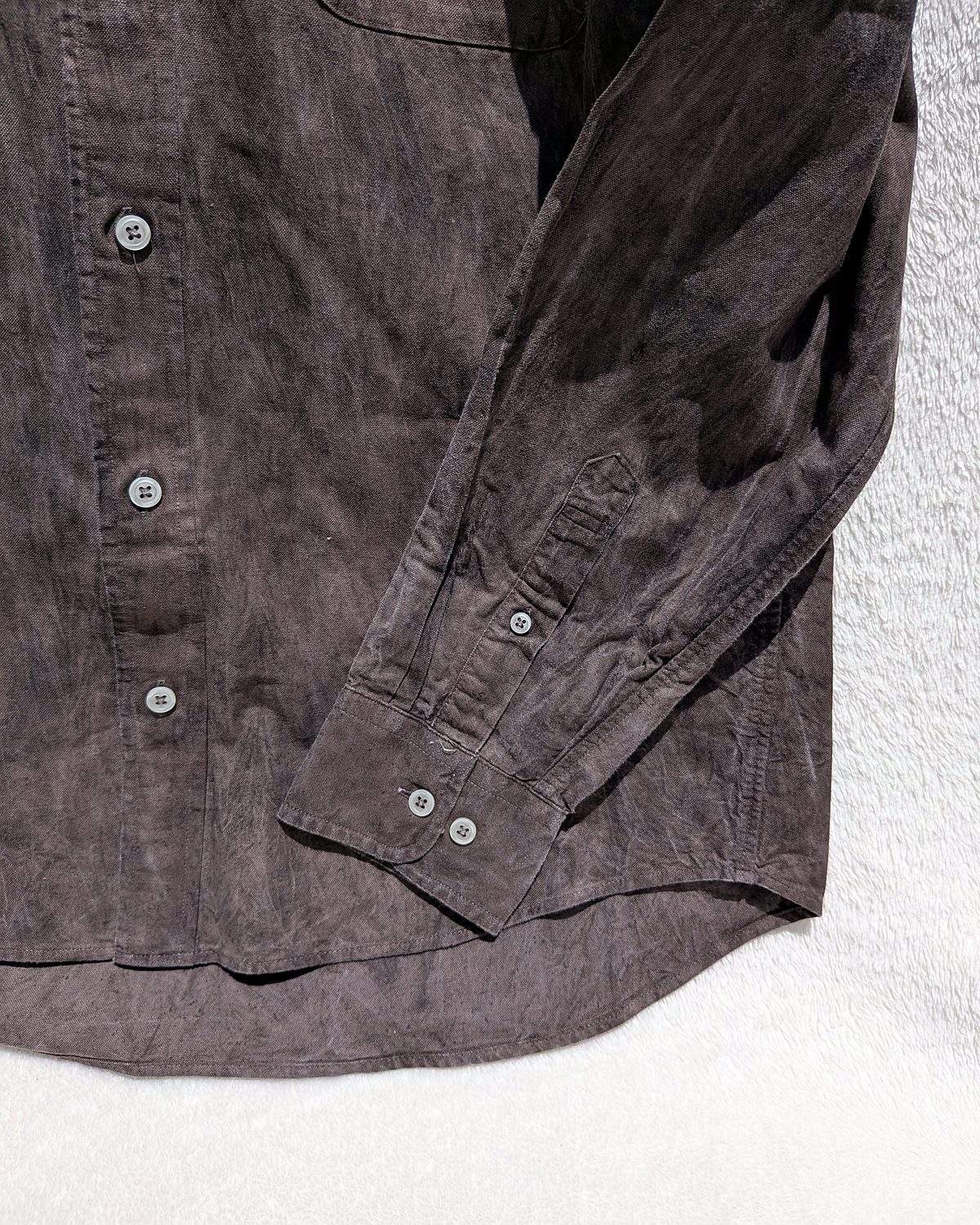
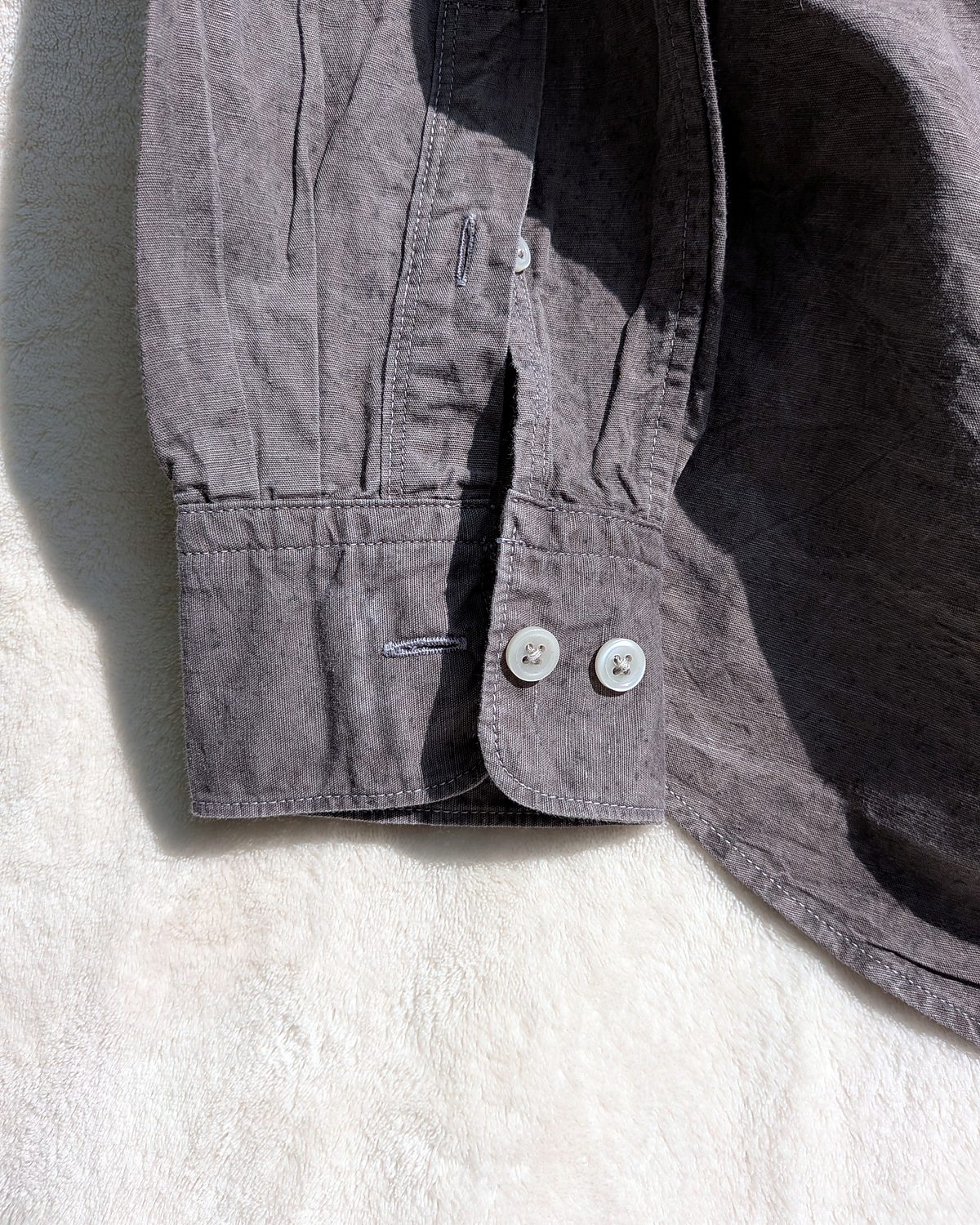
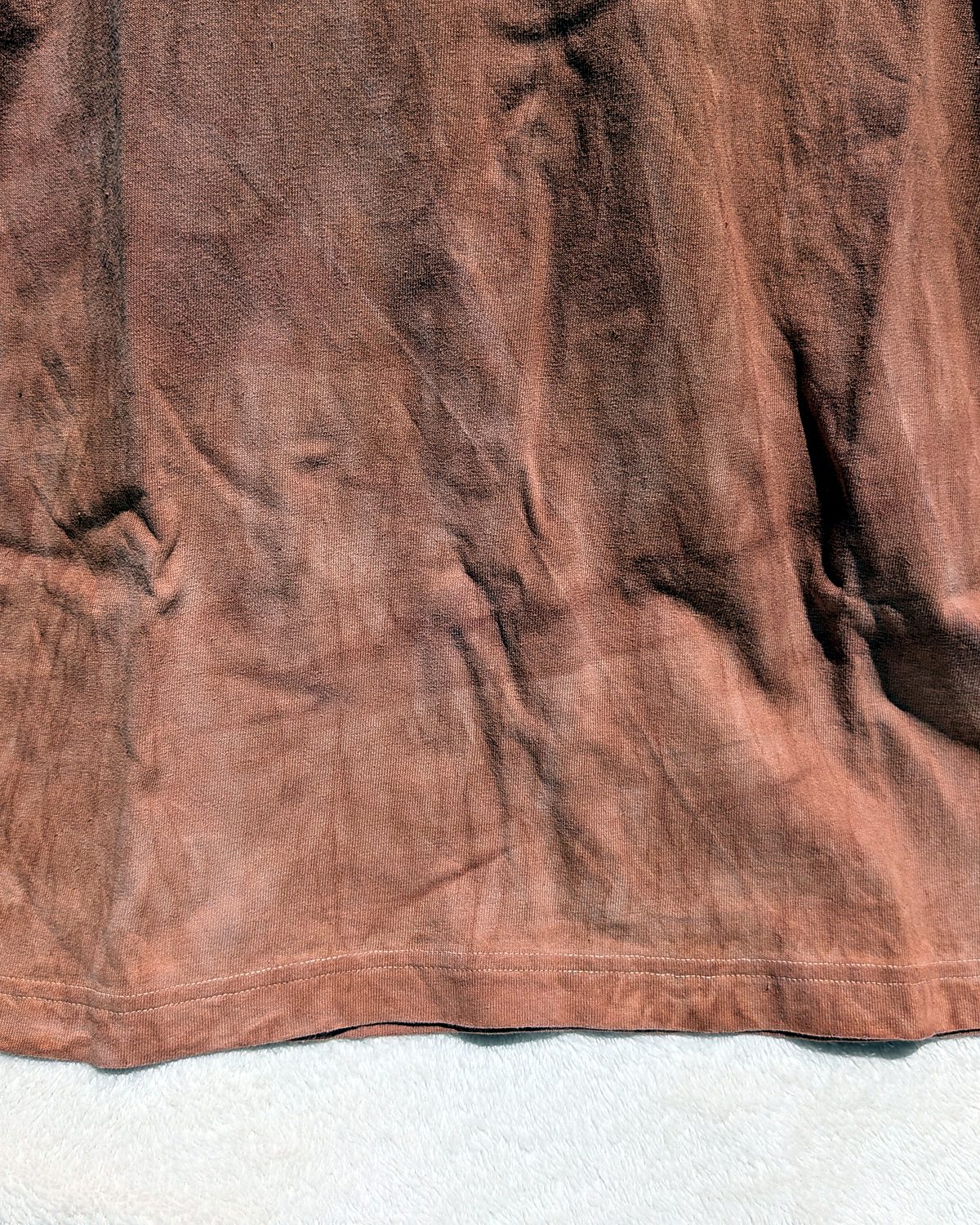
Look closely
Hems, cuffs and seams are where the dye settles first. Expect them to darken with wear.
Care & Maintenance
A SHIBUI piece isn't finished the day it arrives — it keeps changing for as long as you wear it. A little care in the first few months makes a real difference to how it ages. Here's everything you need to know.
The essentials
The short version, if you only read one section.
✓ Do
✕ Don't
Step by step
Fill a basin with cold water
Lukewarm at the very warmest — never hot. Add a small amount of mild, colour-safe detergent and mix until dissolved.
Submerge and gently agitate
Swirl the piece by hand for 2–3 minutes. Don't scrub, wring, or twist the fabric.
Rinse in cold water until clear
Change the water once or twice. Some colour release in early washes is normal.
Press out water, don't wring
Lay the piece flat inside a clean towel and press gently to remove excess water.
Dry flat, out of direct midday sun
Reshape while damp. A little morning or afternoon sun is good — avoid hours of harsh midday heat.
Machine washing
How: cold water (30°C), gentle cycle, the garment on its own, then dry flat or hang in shade. Do not tumble dry, bleach or use fabric softener.
Disclaimer: kakishibu can release colour, and iron in the dye can dissolve in the wash water. SHIBUI accepts no responsibility for colour transfer onto other garments or items, for staining or rust-like marks caused by dissolved iron, or for any effect on your washing machine. If you are unsure, hand wash.
What to expect
Kakishibu deepens with UV exposure and wear. This is the whole point of the dye — not a defect to correct for.
Day 1
Warm amber-tan. Fabric feels slightly stiff — this softens with the first few washes.
Month 3
Noticeably darker and richer. Hand of the fabric is softer, more relaxed.
Year 1
Deep chestnut (or near-black, for iron-dyed pieces). Distinctly yours — no two pieces age the same way.
Year 5+
A living heirloom. The colour reflects years of light, washing, and wear specific to you.
A note on scent
Freshly dyed kakishibu has a faint, earthy, slightly tangy aroma — a natural result of fermentation, not a flaw. It's the same reason kakishibu has been used for centuries as a natural preservative.
The scent fades noticeably within the first few weeks of wear and fresh air, and disappears almost entirely after the first few washes.
Common questions
Hems, cuffs and seams are where the dye settles first. Expect them to darken with wear.
Send us a photo and we're happy to take a look and offer advice — no charge, no obligation.